E3 Tail Light Inserts

vraned

Well-Known Member
Site Donor
Site Donor $
Site Donor $$
Messages
253
Reaction score
25
Location
San Jose, CA
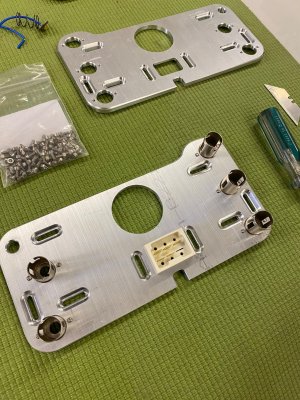
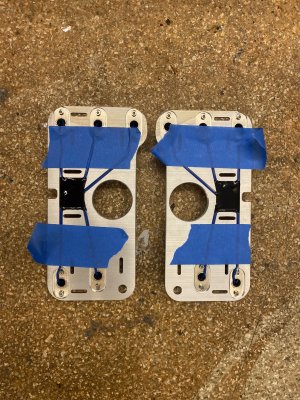
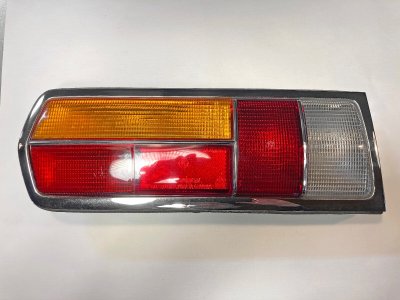
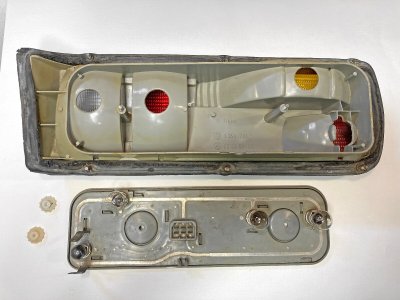
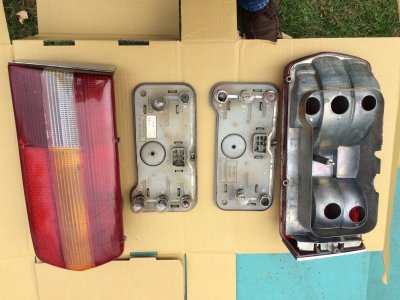
I noticed folks on the E3 forum looking for tail light circuit board replacements. These were probably cutting edge at the time of manufacturing, but the "traces" disintegrate over time. Like many E3 DIY'ers, I soldered in jumper wires as a fix. And it would work for a while. But the metal deposition material continues to erode and eventually the bulbs cannot complete the ground through the sockets. The project below is a more permanent solution that replaces the entire board with a machined aluminum insert with off the shelf sockets. They snap in place of the old boards and are concealed by the plastic back cover of the tail light assembly. I'll post the details of the build below, but cutting to the chase, the picture below shows the parts involved (and an original tail light shown in the upper right hand of the image).

IMG_2224.jpeg


The parts involved:

Sockets (sources off of ebay).
Copper Spade Terminals (digikey)
1/4" Aluminum Plate (McMaster-Carr 6061 T6)
M3 Socket Head Cap Screws (McMaster-Carr)
Extruded PPS Sheet for terminal block (Putnam Plastics)

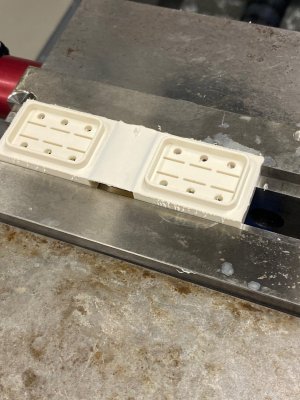
The plates and terminal blocks are CNC machined.
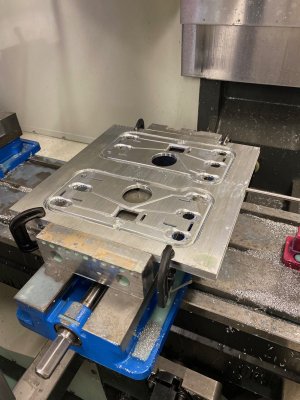
 
The first part of the project involved measuring out the old parts. Several parts were measured with a best guess made as to the orignal dimensions. The latter was necessary as the front and back are supposed to snap together via the tabs and slots, but the plastic definitely deformed over the past 50 years.

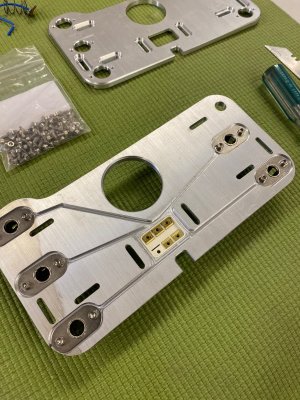
Machining the main plates:

IMG_2219.jpeg

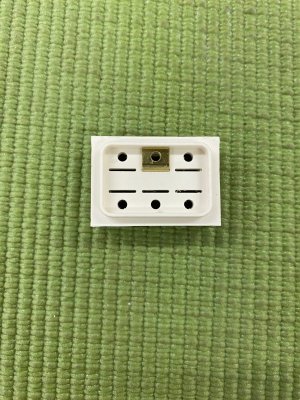
Machining the sockets. There was less guesswork with the dimensions of the sockets.

IMG_2220.jpeg
 
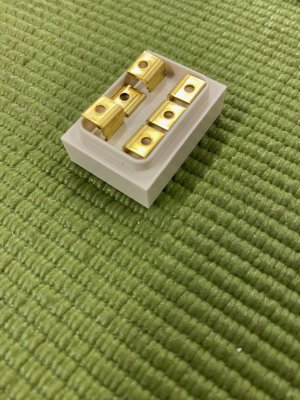
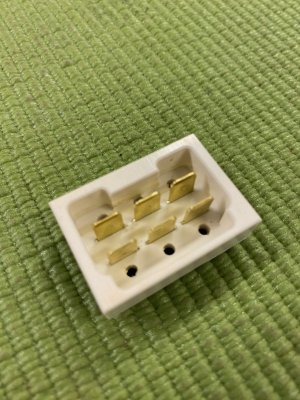
The finished sockets with the spade terminals being installed. Drawings for the terminals were available from digikey, so it made modelling the sockets much easier. I chose PPS as the material because I had some lying around and it is tough with good chemical compatibility.

IMG_2225.jpegIMG_2226.jpegIMG_2228.jpeg
 
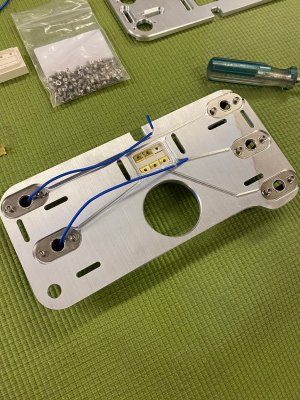
Assembly of the parts was pretty straight forward. The terminal connector assembly snaps into the aluminum plates by virtue of tight tolerancing of the parts. The bulb sockets are screwed in place and wires trimed to length to fit in to the wire channels.

IMG_2229.jpegIMG_2230.jpegIMG_2231.jpeg
 
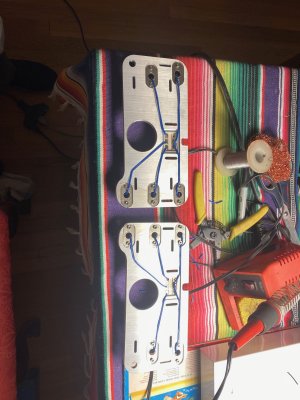
The positive leads are soldered to the appropriate pins of the terminal block. Note, there is an unused socket position on the original parts. I think it may have been intended as rear fog lamps. In these assemblies I wired this extra socket as an addition brake light. You can see this in the first image below on both assemblies (rightmost leads running vertically in line). Finally, the wires and terminal block were potted in place with Hysol epoxy.

IMG_2238.jpeg IMG_2239.jpeg
 
Wow, those look exceptional! Well done. How many sets are you making?
I made the first set in 2020 before I sold my Bavaria. The guy who bought it asked me to make another set for his dad's E3 in 2023. I charged him $500 and basically broke even. I am not interested in making any more; too many other car and house projects to contend with. However, I would gladly donate the g-code and BOM to the forum for anyone interested in making them. The g-code is for a modern HAAS, so it would be portable to a lot of other machines with minor header changes.
 
Based on the discussions.. I wanted to double check... are these for:

A. E3 Series I tail lights (horizontal c-pillar vent):

E3-Series1-Taillight1.jpg

E3-Series1-Taillight2.jpg


B. E3 Series II Tail lights (vertical c-pillar vent):

E3-Series2-TailLight.JPG


Comparing my images to the CNC'd images in your original description.. I believe you are working with Series II tail lights.

I would like to make this item for a Series I tail light and implement a minor mod: I can buy modern filament bulbs that fit the sockets, but I plan to shatter the glass, remove the tungsten filament, and install CREE white LED's (w/ heatsink & current limiting resistor) where the filament originally stood. This will allow me to have LED based lighting. I have a similar concept planned for my front E3 headlights.
 
The Series-2 plates appear to use the same features as the Series-1, but in different arrangement. If so making the Series-1 plate based on your picture and the existing Series-2 CAD model would be straight forward. And the 6-position receptacle looks the same as the Series-2. Can someone confirm that the Series-1 and Series-2 6-pin receptacles are the same? Regarding the Bus Bulb parking lamp used in the Series-1, I would be inclined to change that position to a conventional double contact 12 series lamp holder (equivalent to a VCC 12-225). This would permit use of readily available LED bulbs for all positions in the Series-1.
 
Back
Top