Differential gear ratio

Catbert

Well-Known Member
Site Donor
Messages
161
Reaction score
77
Location
Signal Hill, CA
On a previous post about my disdain for Allen key oil plugs and the proximity of my differential upper oil fill plug to the muffler (I have upper and lower fill plugs on mine which SFDon said is because my diffy is from an E24), I looked for confirmation that I indeed have a LSD. With my car on a lift, when I rotate one rear wheel and the other moves in the same direction, proof that I have a LSD. Members were telling me where to look for the stamped numbers. I looked and looked but found nothing except other numbers on nearby components.

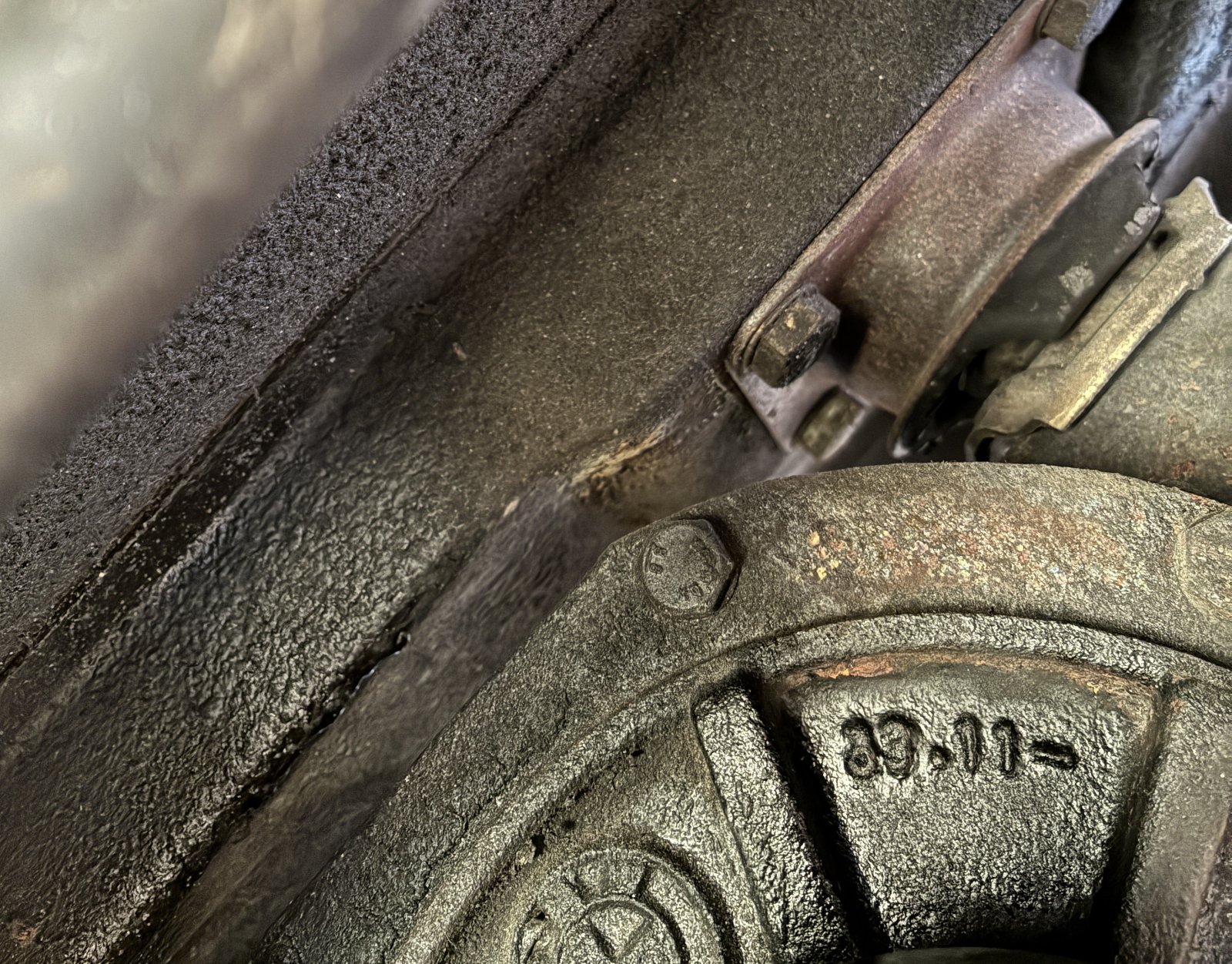
Last night I looked more carefully. Not where I was told they'd be, I found the numbers stamped way at the top of the diffy. I was hoping for a 3:45 final drive gear. To my disappointment, I found the numbers 11:33 which means I have a wimpy tall 3.00 final drive gearing. Yes, great for highway cruising but not so much for spirited acceleration. Oh, I do have the Getrag 5-speed, so together I can cruise at freeway speeds at low RPMs. Oh man I wish I saw the numbers 11:38!
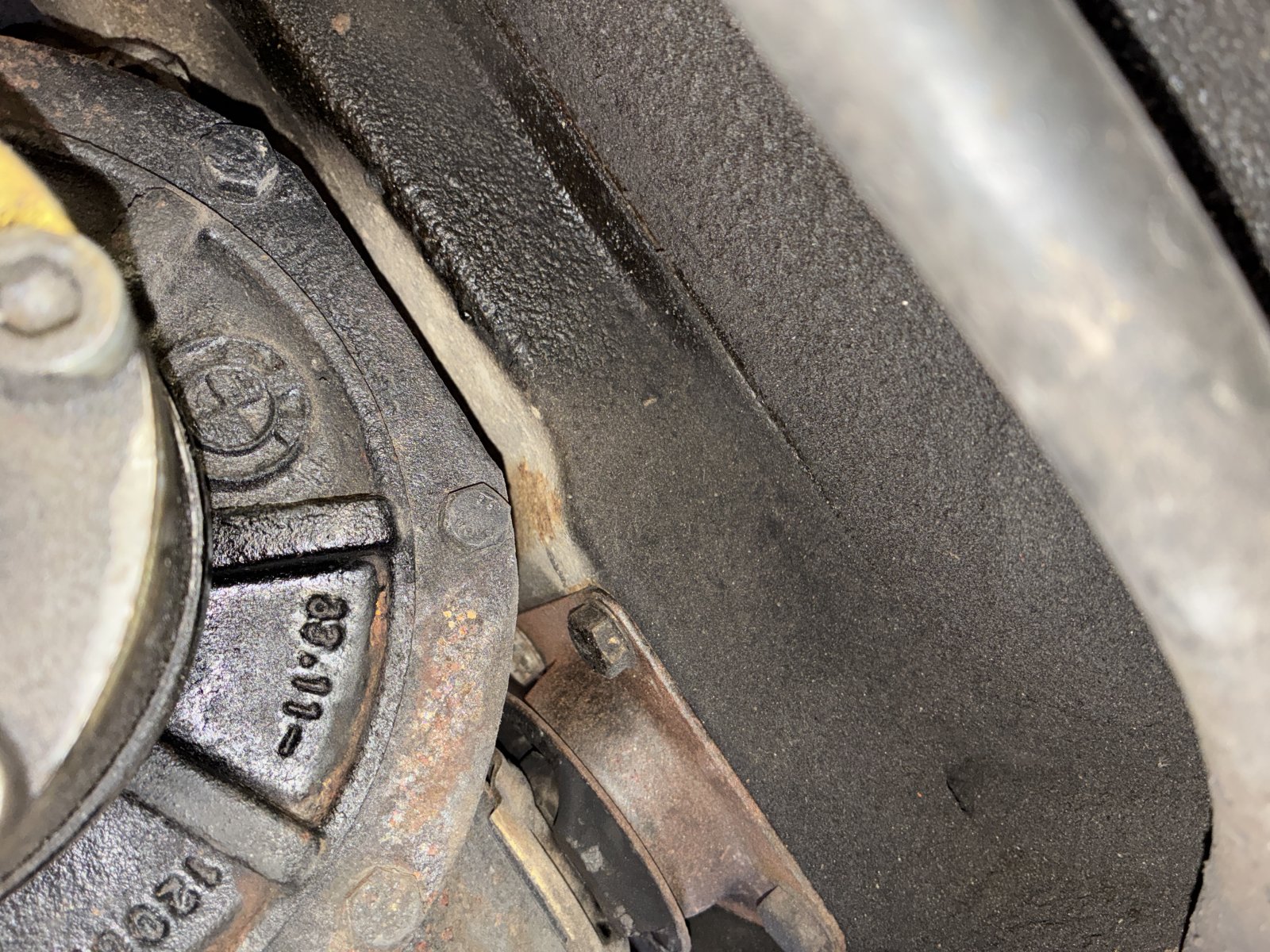
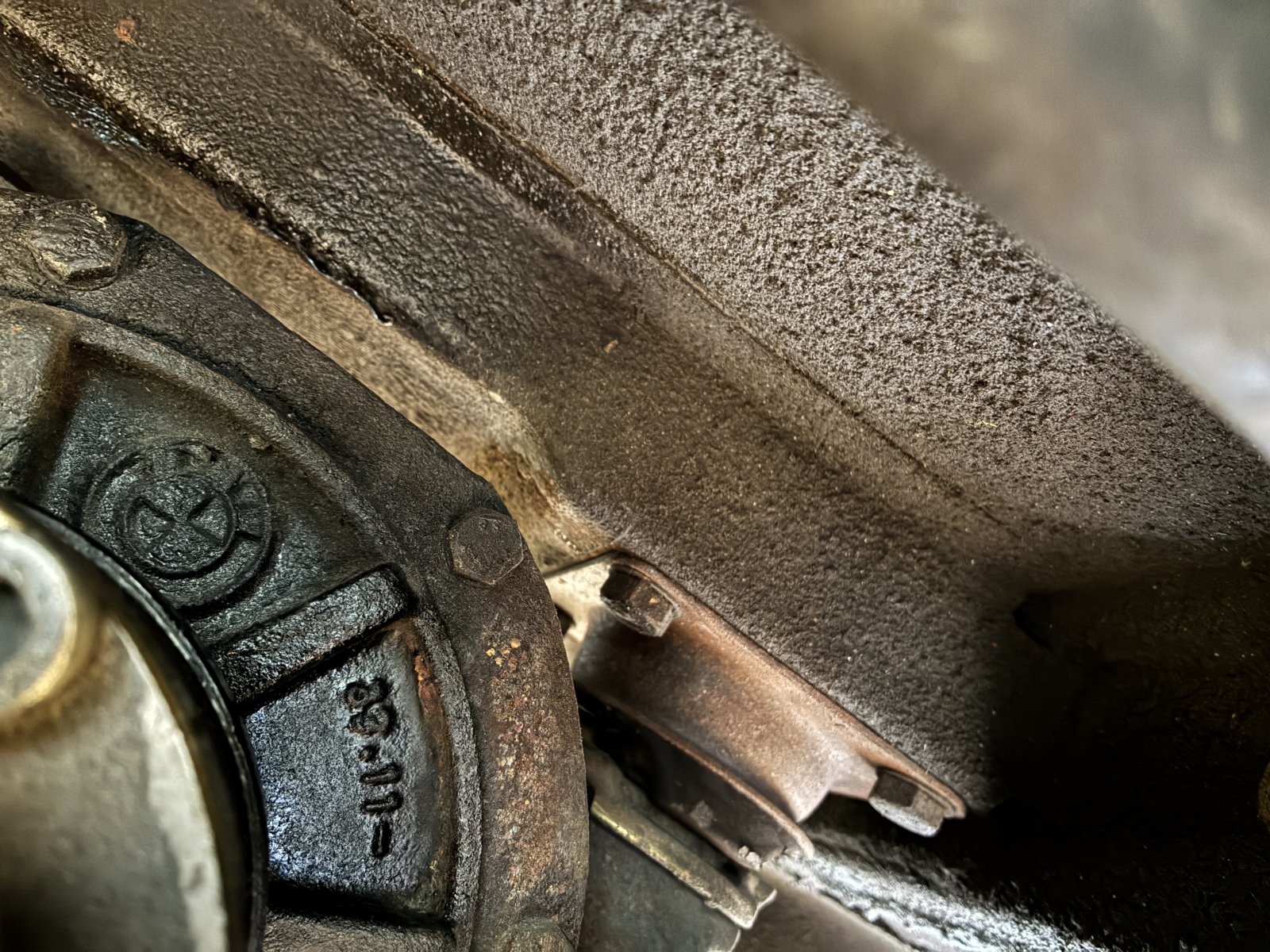
IMG_6376.jpeg
IMG_6370.jpeg
IMG_6373.jpeg
 
I realize that you have an E24 diff, but that doesn't look like the typical way these are marked. The raised numbers more go along with casting numbers and yield a "ratio" of 3.0 which I don't think is a ratio that was present in BMWs of this era.
Since I know you feed the AI beast like I do at times, I think here's the relevant info from Gemini. As always, take with a grain of salt, but the response seems valid:

The raised 33.11 digits on the side of your differential housing represent the BMW OEM Main Group and Sub-Group part categorization codes. It does not indicate your gear ratio, tooth count, or fluid capacity. [1]
BMW uses a standardized 11-digit system across all parts. When casting large iron or aluminum pieces like a transmission or differential, they often cast the first few digits of the part number group directly into the mold for inventory and production tracking. [1]
The digits break down exactly as follows:
  • 33 (Main Group): In BMW's system, 33 denotes Rear Axle, Rear Suspension, and Rear Drive Components. (For example, group 31 is front suspension, 34 is brakes).
  • 11 (Sub-Group): This specific sub-group denotes the Differential Housing and Cover assembly. [1, 2, 3]
Typically, if you look closer at that casting mark, you will find a longer string of numbers following it (e.g., 33.11 - 1 204 898 or similar). Those subsequent numbers are the actual individual part numbers for that specific cast-iron "pumpkin" shell.
Because BMW used the exact same cast-iron outer housing to build differentials with many different internal gear combinations, the raised 33.11 code will be identical on completely different differentials (such as a 3.07 non-LSD vs. a 3.91 LSD). To find your actual gear ratio, you will still need to check the stamped steel bolt-on tag (S3.46, S3.07, etc.) or count the internal teeth on the ring gear. [1]

I think you have more cleaning of the side of that diff to do to identify the ratio...sorry
Hi JC! Well, you've given me hope that my final drive gearing isn't so low, i.e., long tall gearing. I would think installing a diffy with something closer to 3.50 gearing would be done by the owner who made this modification. The fact is, I haven't driven my car at all except for the 1/4 mile drive from the transport drop-off spot to my garage. So, I have much to discover and experience with my CSi. It's like an arranged marriage and I've barely met and know my bride. I do, however, know that I am in love. As always, I really appreciate your comments and help.
 
I think the general answer to your question at this point is "sort out the stuff that truly matters" in terms of making sure the car is road-worthy, drive it for the next summer and then when the weather turns a bit cooler (which I know it does even in California) you will have accumulated the next list of items to take care of. If you do end up changing the differential, you probably want to weld on the diff mount support that Don sells, so best to know in advance what the plan is rather than tackling things just in the order they arise. AMHIK - I installed a 3.45 diff in place of my 3.25 and I'll be taking it off this winter briefly to weld on the support. Your car will drive just fine with either diff, see how it feels in torque as well as at highway speed, lots of debate about the 3.25 vs 3.45 vs 3.64 in terms of what you're trying to achieve - low end torque, mid-range acceleration or high-speed comfort with lower RPM
 
I think the general answer to your question at this point is "sort out the stuff that truly matters" in terms of making sure the car is road-worthy, drive it for the next summer and then when the weather turns a bit cooler (which I know it does even in California) you will have accumulated the next list of items to take care of. If you do end up changing the differential, you probably want to weld on the diff mount support that Don sells, so best to know in advance what the plan is rather than tackling things just in the order they arise. AMHIK - I installed a 3.45 diff in place of my 3.25 and I'll be taking it off this winter briefly to weld on the support. Your car will drive just fine with either diff, see how it feels in torque as well as at highway speed, lots of debate about the 3.25 vs 3.45 vs 3.64 in terms of what you're trying to achieve - low end torque, mid-range acceleration or high-speed comfort with lower RPM
Wise words indeed, CR. I do not intend to change anything major like the diffy. It is what it is. My CSi will become my all around driver and not the "weekend warrior" tearing-up the pavement. If I had a wish, it would be a 3.45 diffy. :)
 
You might be able to eyeball this!

By spinning the rear wheel exactly one rotation and counting how many times the driveshaft rotates, you can get pretty close to determining your ratio.

To eyeball this (somewhat) accurately, I found it helpful to make a mark on the tire/wheel to indicate it's starting and ending position. A wrap of masking tape around the driveshaft with bold sharpie marks to indicate 0°, 90°, 180° and 270° makes it a bit easier to approximate partial rotations. If you can line up (read: “sight”) those marks with a fixed reference point of some kind, even better.

Funny. My dad taught me that trick when I was a kid, yet it just now occurred to me while typing this out that using a stationary camera (phone leaned against a block) to record the driveshaft instead of "eyeballing it" hunched over or on the ground would have made this whole process a bit easier and more precise. :)
 
You could also do 5 or 10 revolutions and divide accordingly - to get a higher level of fidelity to this 'old school' method. I did that just for fun on my Mustang when I got it home after its restoration. That car has a 2.90 - LOL.
 
@lip277 gave me a good idea. Not knowing what he meant by doing revolutions and dividing accordingly, I consulted the AI Wizard of Oz. The wizard said that for a LSD all I have to do is rotate a rear wheel one full turn and then count how many rotations the driveshaft makes. The number of turns equals the ratio. A beautiful and simple approach to finally knowing what my diffy gear ratio is. I will do this when I get home today.
determine-gear-ratio-drive-shaft-300x200.png
 
All E24s had either a Getrag 265/5 (CR) or a 365/6 (Overdrive). Most had the 265/6. Early E24s had an M90 engine that had the torque to drive the 3.07 diff with either trans. My 1980 E24 has a 265/6 and 3.07 and it drives great. 5th gear starts at 85 mph, so yes, tall gearing. I suspect the later (post 82) E24s, esp in the us had a 3.65. Lower power and torque made up for by lower drive ratio. 3.45 diffs are fairly rare, and I have never heard of one in an E24.

The numbers for the ratio are stamped in, and are fairly thin and light. Photo below does a portion of the LSD “S”, and “11 40”, which is 3.64
IMG_6906.png
 
Last edited:
@lip277 gave me a good idea. Not knowing what he meant by doing revolutions and dividing accordingly, I consulted the AI Wizard of Oz. The wizard said that for a LSD all I have to do is rotate a rear wheel one full turn and then count how many rotations the driveshaft makes. The number of turns equals the ratio. A beautiful and simple approach to finally knowing what my diffy gear ratio is. I will do this when I get home today.
View attachment 229251
Just as one revolution of the tires is X number of driveshaft revolutions, 10 tire revolutions would be 10X driveshaft revolutions....
Makes the math easier and reduces the effect of having to judge partial revolutions.
And - if you have a helper - also could make it easier. One set of eyes counting the tire, one set counting the driveshaft.
Just a thought....
 
I have resolution on my diffy gear ratio. First, here is a photo of the area @sfdon said the ratio number would be on my E24 diffy. It seems mine is an anomoly with different stamped numbers as @e9Leveque commented on. "A2 86" ain't the right numbers. Soooooo... I marked the rear wheel and drive shaft and performed the rotation method. I came up with 3.11 rotations. Sooooo... mine is a 3.07, common with the E24 diffy as some have said. The "33.11" stamping pictured above does denote the gear ratio... 3.00, which I guess is close enough to 3.07. Peace.
IMG_6385.jpeg
 
I think those are the numbers, but part of one is missing or obscured. If you do the math, 86/3.07=28.013, so the ratio numbers are probably 28 86.

Seems off though since both 28 and 86 are divisible by 2, so more appropriate numbers might be 14 43, which is also 3.07
 
I think those are the numbers, but part of one is missing or obscured. If you do the math, 86/3.07=28.013, so the ratio numbers are probably 28 86.

Seems off though since both 28 and 86 are divisible by 2, so more appropriate numbers might be 14 43, which is also 3.07
Drive shaft don't lie! Thanks for your input. :)
 
@lip277 gave me a good idea. Not knowing what he meant by doing revolutions and dividing accordingly, I consulted the AI Wizard of Oz. The wizard said that for a LSD all I have to do is rotate a rear wheel one full turn and then count how many rotations the driveshaft makes. The number of turns equals the ratio. A beautiful and simple approach to finally knowing what my diffy gear ratio is. I will do this when I get home today.
View attachment 229251
Finally, some math I understand!
 
Back
Top