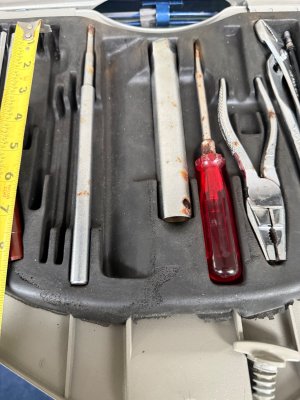
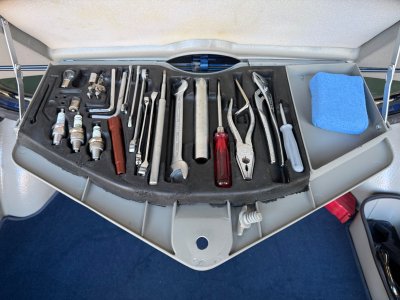
Rusty tool kit component solution

dbrogdo4

Member
Messages
34
Reaction score
20
Location
Birmingham, Al
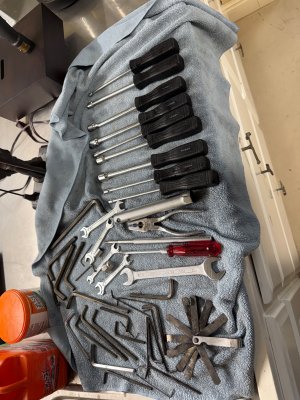
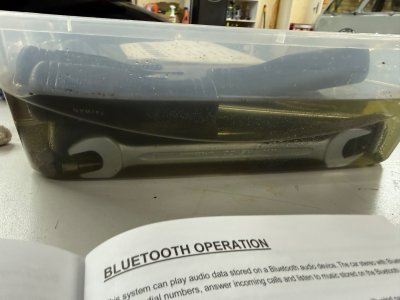
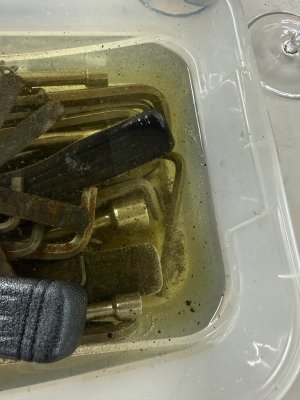
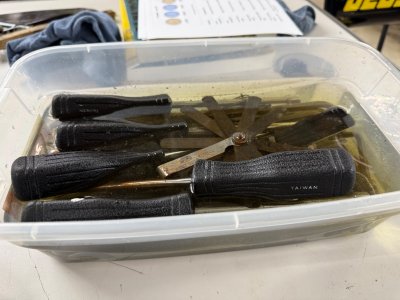
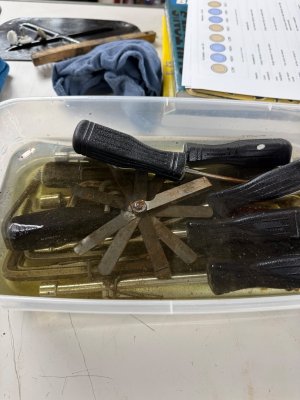
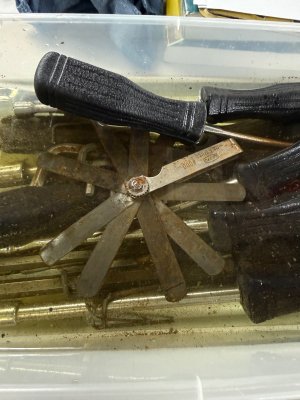
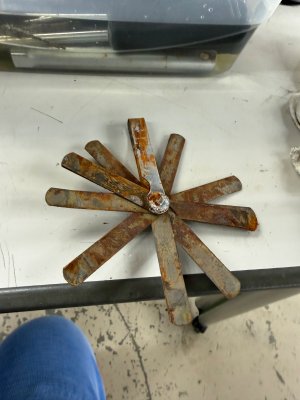
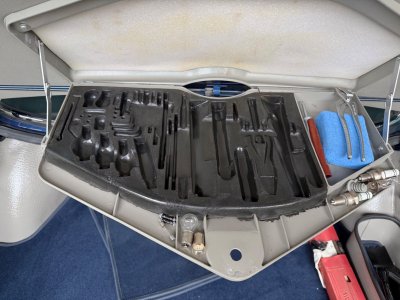
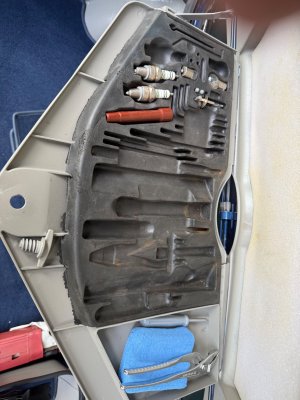
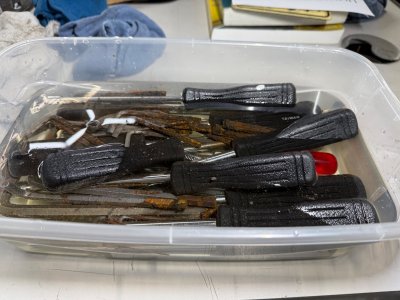
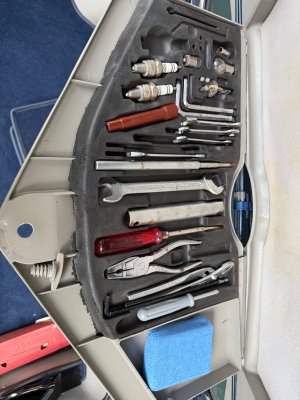
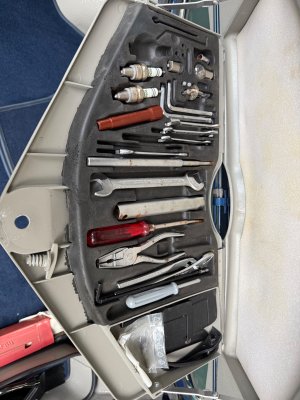
Once my (new) 74' 3.0 CSI came to my home in America, I have been doing small projects to clean it up and make it mine. The first one was to clean up the rusty tools I inherited in the trunk tool set. I have attached before and after pics. I made a solution of Citric Acid that I had in a bag for cleaning up an appliance with. Your wife probably has a bag around the kitchen somewhere! I just grabbed a hand full of the powder and put it in a Tupperware square tub that was tall enough to drop my tools in to. Added water and stirred it up. I added all my tool set wrenches, etc. Then I looked around my garage and added some newly acquired rusted nut drivers and hex keys that I got off my father-in-laws old garage cleanup. Amazingly, the solution started bubbling almost immediately. Left it alone for a couple of hours and I took them out. It was crazy how effective it was. I wiped them off and rinsed them and dried with a towel. If you don't get the acid solution off, it will keep cutting into the medal. You can dip them in a solution of baking soda to neutralize, if needed. Thought I would share the before, during and after pics; in case anybody else inherited a few rusty tools.
 

Attachments

  • IMG_1588.jpeg
    IMG_1588.jpeg
    777.3 KB · Views: 68
  • IMG_1586.jpeg
    IMG_1586.jpeg
    356.2 KB · Views: 64
  • IMG_1585.jpeg
    IMG_1585.jpeg
    554.5 KB · Views: 59
  • IMG_1584.jpeg
    IMG_1584.jpeg
    447.9 KB · Views: 59
  • IMG_1583.jpeg
    IMG_1583.jpeg
    459 KB · Views: 58
  • IMG_1582.jpeg
    IMG_1582.jpeg
    556 KB · Views: 61
  • IMG_1581.jpeg
    IMG_1581.jpeg
    388.9 KB · Views: 63
  • IMG_1580.jpeg
    IMG_1580.jpeg
    539.6 KB · Views: 65
  • IMG_1579.jpeg
    IMG_1579.jpeg
    568.6 KB · Views: 63
  • IMG_1578.jpeg
    IMG_1578.jpeg
    500.3 KB · Views: 62
  • IMG_1566.jpeg
    IMG_1566.jpeg
    565.9 KB · Views: 61
  • IMG_1565.jpeg
    IMG_1565.jpeg
    584.6 KB · Views: 62
  • IMG_1568.jpeg
    IMG_1568.jpeg
    505.1 KB · Views: 63
  • IMG_1658.jpeg
    IMG_1658.jpeg
    530 KB · Views: 68
Wow, nice work. Now, two reasons for not storing them in the car's toolbox:
- Unless the box is new, the weight of the tools may fracture the brittle plastic that make up the box's closure or mounting tabs when you hit a big bumps.
- Moisture will get into the toolbox and re-corrode the tools (living near the ocean, that's a real problem for me, even in dry southern California).
 
Yeah, most people store them in a tool box in the trunk and fill the tool kit at the start of a show, and return them to the tool kit at the conclusion of the shows.

By the way, the tools themselves are well designed. I often use older versions of the open end wrenches (not the pretty ones I keep in the car) when I need a wrench that is flat and thin, and the spark plug wrench is better than any other setup I have tried for removing spark plugs.
 
Citric acid works well, but does want to eat away at the metal. A less corrosive option is Evap-o-Rust, or similar product that passivates the rust and leaves the steel alone. I use a generic version that is much less expensive. It takes longer than acid rust removal, but works well.
One drawback is that it can darken the steel over time. Perhaps a quick dip in some citric acid would brighten the steel back up without any significant corrosion but I haven't tried it.
While there are many products and opinions about tool maintenance, I apply a coating of Boeshield T-9 to protect tools from corrosion. I find it works well. Here's a summary of its benefits from the web:

Boeshield T-9 is a waterproof lubricant and rust/corrosion protectant originally developed by The Boeing Company for aircraft components. It uses a solvent-and-wax formula that penetrates crevices, displaces moisture, and dries to a clean, waxy film.
Boeshield T-9 lubricates and protects metal, chains, cables, tools, and electrical connectors against freshwater and saltwater corrosion without using silicone or Teflon. Safe on paint, plastic, fiberglass, and vinyl.
I think the tools are all zinc plated, so why not just write wheel the rust off, convert any rust that's left and then replate them?
 
I have an extra set of some rusty ones, I was going to wire wheel and nickel plate them. Chrome seems like an unnecessary expense for these
 
I had one wrench nickel plated and it is too bright, I was hoping without the chrome it would look correct. I can post a pic on Sunday if needed.
 
I had one wrench nickel plated and it is too bright, I was hoping without the chrome it would look correct. I can post a pic on Sunday if needed.
Yes, I'd like to see it. I have the Caswell nickel plating kit, if anything my sense was that the nickel ends up less shiny than the chrome but perhaps I am mistaken in that.
 
Back
Top