
Brake Fluid - Is ATE DOT 4 Safe and a Good Choice?

Catbert

Well-Known Member
Site Donor
Messages
131
Reaction score
74
Location
Signal Hill, CA
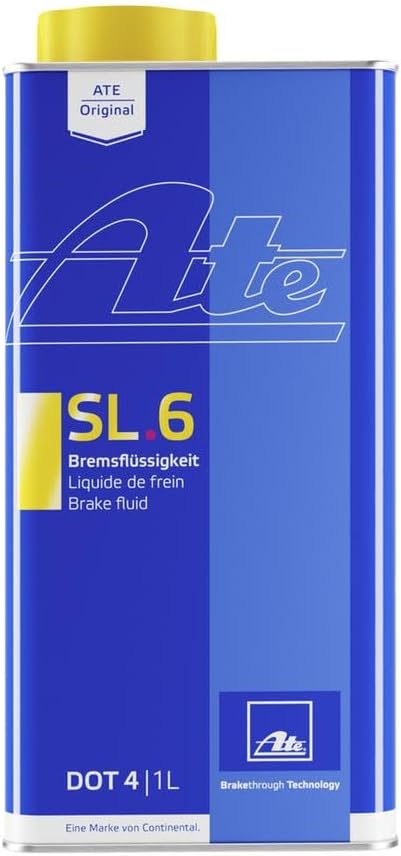
I just did a search on this site and then one using the "AI wizard." Two days ago, I completed a brake fluid change on my 1975 CSi. I had a can of ATE "blue" DOT 4 on hand and used that. Then, I wondered if this 51 year old car had any special brake fluid requirments other than using nothing less than DOT 3. I found nothing here but the AI wizard recommended against using a modern DOT 4 fluid due to the lower viscosity of the ATE. Nothing about damaging the brake system was mentioned. So E9 wizards... is ATE DOT 4 safe if not overkill?
51c0RMtC7FL._AC_SL1000_.jpg
 
Agree with Scott I had the type 200 based on my review but I don’t think it’s majorly different. The one fluid that would be different is if you upgrade your power steering pump there’s a newer type of fluid that should be used to protect the seals - CHF 11S
 
I posted a pic of the ATE, but think what I have at home is the ATE 200, whatever the difference is. The AI wizard only mentioned using a lower viscosity may not be ideal, but won't harm the system.

Ah! Just did a quick search on ATE 200 vs. SL vs. SL6. I'm 99% certain I have the ATE 200 at home. The ATE SL6 is a lower viscosity fluid designed for modern cars with ABS systems. So, the ATE 200 and SL with standard viscosity is a great choice that matches the viscosity needs of our older cars.
 
Last edited:
There is absolutely no difference between the Ate 200 and Ate Super Blue, except for the blue dye, same boiling point wet and dry and same chemical formulation. We used to alternate the fluids during changes so we could see that we got all the old fluid out. I don't think the Super Blue is still distributed in the US, because of the dye.
 
Last edited:
The DOT banned ATE blue simply because of color. I bet, as so much of our lives are dictated by an N=1, someone did something foolish based on the color. ATE should distribute the dye they used so this simple common sense approach to brake fluid flush can be restored.
 
Interesting question. Nothing wrong with DOT 4 in my opinion, and cans usually state they can be mixed with DOT 3, but there is also a different spec DOT 4 low viscosity fluid meant for newer braking systems. DOT 4 Class 6 (SL.6).
Any group thoughts on whether use of that lower viscosity fluid will enhance the leakage factor in older hydraulics? Presume the newer systems are tighter tolerance/need "quicker" fluid response but is it like the 0- motor oils.
1793382195026.png
 
They make it sound like the new SecuBrake can be spilled without fear - (till they find out martens love it ;) )

"ATE SecuBrake is the first brake fluid that has been engineered with renewable, raw materials. This pioneering brake fluid meets the legal requirements for a DOT 4 fluid without containing boric acid esters. The formulation results in a product that is safer to manufacture and use, while still meeting key performance requirements. Designed with safety in mind, ATE SecuBrake fluid is manufactured using renewable raw materials. It makes everyday shop work safer as it requires no special handling or storage and is entirely free of hazardous materials that are subject to labeling requirements."

1793383146899.png
 
Back
Top