Seeking OC Machine Shop Recommendations for M30 Head Repair

KF6TRG

Member
Site Donor
Messages
42
Reaction score
4
Location
Orange County, California
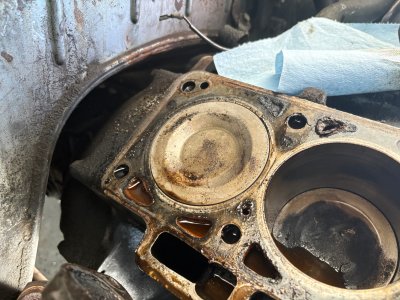
A few weeks ago, while driving my 1973 3.0CS (87k original miles), the engine suffered what appears to be either a head gasket failure or a cracked head. My evidence includes the coolant temperature gauge climbing to the red over a 1–2 minute period, a strong smell of coolant, and steam exiting the tailpipe.

Unfortunately, I was stuck in heavy traffic on the 405 and couldn't exit for about 5–10 minutes—a painful experience. Despite this, the engine continued to make good power, and I was able to park at my office. I later had the car flatbedded home and drove it into my garage. Once the engine cooled, I pulled the dipstick and found clean, clear oil. However, upon removing the pressure cap from the coolant recovery tank, I found oil residue on the underside of the cap and contaminated coolant.

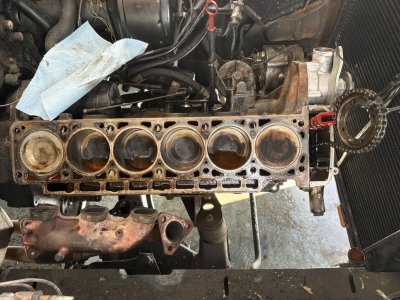
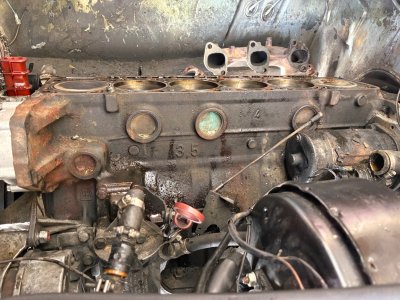
My plan is to pull the head and take it to a machine shop specializing in M30 heads for a thorough inspection, cleaning, and any necessary repairs. While it's there, I intend to have the valves lapped, valve guides checked, and valve stem seals replaced. I also plan to have all aluminum parts, including the intake manifold, soda blasted.

I am looking for a referral to the right machine shop in Orange County to handle this work, as the expertise of the shop is key to the success of this project.

Additionally, if you think my diagnosis might be faulty or if there are other "while you're in there" items I should consider, please let me know.

Thanks, Alex
 
Was it a hot day? A/C on? Overheating while in heavy traffic can be caused by cooling system shortcomings that do not show up while moving. What is the condition of your radiator? Any chance it was partially clogged or low on coolant?
 
It was a cool morning, and the car had never run hot, even in traffic. Also, the radiator is relatively new, and I just replaced the water pump, thermostat housing, cover, and thermostat a couple of months ago. Also, the coolant is mostly new, and the A/C was off.
 
Thank you, Chris! Any thoughts on my diagnosis? I believe it to be the gasket.
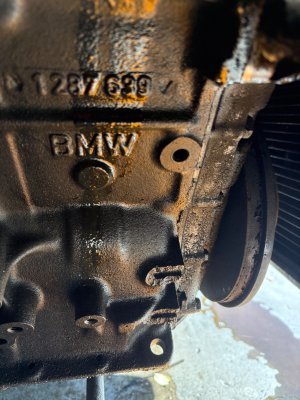
It could be head gasket or you cracked the head, does it have a 70s casting date near cylinder 2? Engine Supply can do everything you need. I just replaced the exhaust valve seats, valve guides and rockers on my NK M10 motor. Where are you located? An infrared thermometer is a good tool to have as well.
 
It could be head gasket or you cracked the head, does it have a 70s casting date near cylinder 2? Engine Supply can do everything you need. I just replaced the exhaust valve seats, valve guides and rockers on my NK M10 motor. Where are you located? An infrared thermometer is a good tool to have as well.
I am in Mission Viejo - This is the car you looked at with me in December 2024. I will check the casing date - I believe it is the original head.
 
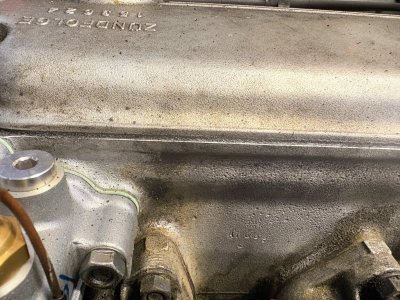
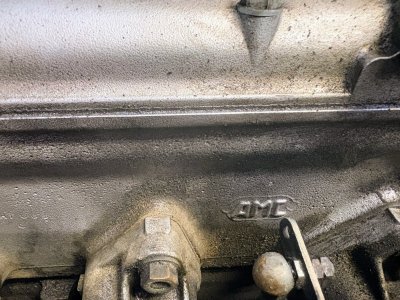
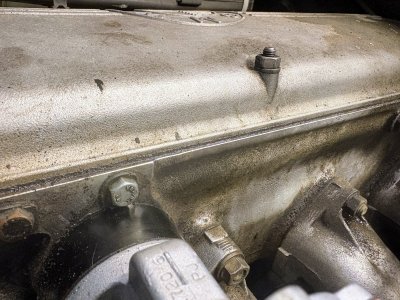
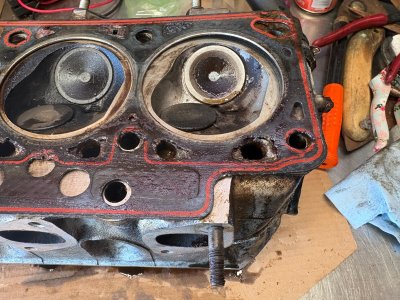
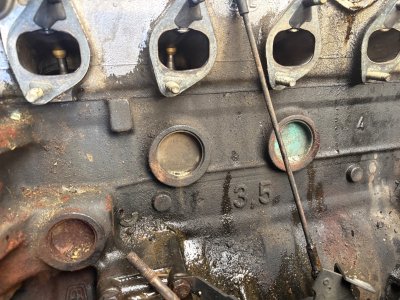
This is the cylinder head. Here is what I found about the markings (Gemini):

That "AMC" stamp changes the story a bit—but in a way that’s actually quite positive for your long-term plans.

AMC stands for Amadeo Marti Carbonell, a Spanish manufacturer. These are high-quality aftermarket replacement heads. Because the original 1970s BMW M30 heads were notorious for cracking if they ever got hot, many 3.0 CS owners (and BMW dealers) replaced them with AMC units in the 80s and 90s.


What this means for your 3.0 CS:​

  • The Casting Date: AMC heads typically do not have the same "clock" or year-stamp as original BMW castings. If it doesn't have a date circle between cylinders 1 and 2, it’s because AMC didn't always use that convention.


  • Durability: In the BMW community, AMC heads are generally considered more robust than the original early-70s castings. They are cast with slightly thicker walls in the common "crack zones" between the valves and water jackets.
  • Performance: The intake and exhaust ports on an AMC head are almost identical to the BMW original. However, because it’s an aftermarket casting, the interior of the ports can sometimes be a bit "rougher." Since you are already taking it to a machine shop and running Webers, this is a perfect time to have them do a light "clean up" or port match to smooth out any casting flash.
  • Camshaft/Rockers: AMC heads use the standard BMW internals. Your existing camshaft, rocker arms, and spray bar will fit perfectly.

Why you have it:​

A previous owner likely encountered a crack in the original 1973 head and chose the AMC as a superior, modern (at the time) replacement. It’s a sign that someone cared enough about the car to "fix it right" with a brand-new casting rather than welding an old one.

Recommendation for the Machine Shop:​

When you drop it off, tell them:

"This is an AMC replacement head for an M30. Please focus on checking the valve guide clearances and verify that the rocker shaft bores are within spec." AMC heads are great "blanks," but occasionally the factory-installed valve guides benefit from a professional touch-up to ensure they are perfectly concentric.
 

Attachments

  • IMG_9635.JPG
    IMG_9635.JPG
    555.9 KB · Views: 23
  • IMG_9636.JPG
    IMG_9636.JPG
    512.2 KB · Views: 22
  • IMG_9638.JPG
    IMG_9638.JPG
    505 KB · Views: 22
This is the cylinder head. Here is what I found about the markings (Gemini):

That "AMC" stamp changes the story a bit—but in a way that’s actually quite positive for your long-term plans.

AMC stands for Amadeo Marti Carbonell, a Spanish manufacturer. These are high-quality aftermarket replacement heads. Because the original 1970s BMW M30 heads were notorious for cracking if they ever got hot, many 3.0 CS owners (and BMW dealers) replaced them with AMC units in the 80s and 90s.


What this means for your 3.0 CS:​

  • The Casting Date: AMC heads typically do not have the same "clock" or year-stamp as original BMW castings. If it doesn't have a date circle between cylinders 1 and 2, it’s because AMC didn't always use that convention.


  • Durability: In the BMW community, AMC heads are generally considered more robust than the original early-70s castings. They are cast with slightly thicker walls in the common "crack zones" between the valves and water jackets.
  • Performance: The intake and exhaust ports on an AMC head are almost identical to the BMW original. However, because it’s an aftermarket casting, the interior of the ports can sometimes be a bit "rougher." Since you are already taking it to a machine shop and running Webers, this is a perfect time to have them do a light "clean up" or port match to smooth out any casting flash.
  • Camshaft/Rockers: AMC heads use the standard BMW internals. Your existing camshaft, rocker arms, and spray bar will fit perfectly.

Why you have it:​

A previous owner likely encountered a crack in the original 1973 head and chose the AMC as a superior, modern (at the time) replacement. It’s a sign that someone cared enough about the car to "fix it right" with a brand-new casting rather than welding an old one.

Recommendation for the Machine Shop:​

When you drop it off, tell them:
Also, this:

That "AT005" stamp is a specific identification mark used by AMC (Amadeo Martí Carbonell).

While original BMW heads have a date "clock" circle, AMC uses alphanumeric codes to identify their production batches and specific casting versions.

What "AT005" Tells You​

  • Production Traceability: This is a batch code. While it doesn't give a calendar date as easily as the BMW circle, it confirms you have a relatively modern replacement. AMC heads didn't enter common circulation for the M30 until the late 80s and 90s.
  • The "Updated" Casting: The fact that it is an AMC head with an "AT" prefix suggests it's from their later production lines. These are widely regarded as the "problem solvers" for the M30. They are heavier and have more material around the coolant passages—the exact areas where your original 1973 head likely failed.
  • Weber Compatibility: Because this head was cast later, it likely has the "universal" intake port shape. This is actually a benefit for your twin Webers, as it provides a very stable surface for the intake manifold gaskets.

Verification Step​

When you get the head off, look at the combustion chamber side. AMC heads often have a very clean, smooth finish in the chambers compared to the sand-cast look of the original BMW heads.

A Critical Check for your "AMC" Head:​

Since you are sending this to a machine shop, ask them to check the Rocker Shaft Bores. On some replacement heads (including AMC and early Febi units), the tolerances for the rocker shafts can occasionally be tighter or looser than the factory BMW specs.

  • If the shaft is too loose, you’ll lose oil pressure at the top end.
  • If it’s too tight, the rocker arms won't pivot smoothly.
 
It was a cool morning, and the car had never run hot, even in traffic. Also, the radiator is relatively new, and I just replaced the water pump, thermostat housing, cover, and thermostat a couple of months ago. Also, the coolant is mostly new, and the A/C was off.
OK, sounds like your cooling system wasn't the cause.
 
I have one of those cylinder heads as a spare, on an M30 engine that was fitted to a Euro 730 E23 that I parted out a few years ago.This is my backup head, and engine. and was also fitted with triple Italian webers, BTW. Not to mention, the Stahl headers that were attached...I have so much development that I can plan for my Coupe....keeps me "engaged". ;)
 
Back
Top