
How the heck are you supposed to get the wheel hub out? Here is where I got to in pics attached. You can't get a two or three jaw puller on the assembly. Do you just bang it out? I don't want to mess up the threads on the shaft.

You are using an out of date browser. It may not display this or other websites correctly.
You should upgrade or use an alternative browser.
You should upgrade or use an alternative browser.
Rear Wheel hub removal: Help Needed
- Thread starter Paulaner
- Start date
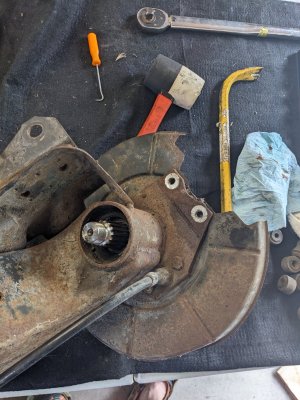
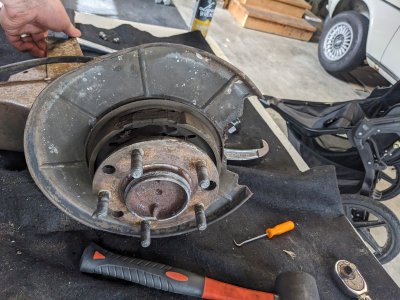

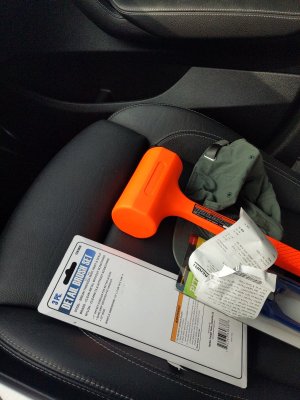

I have heard that this is a terribly difficult job...Seems they were right... @sfdon noted that he has never seen a coupe with rear wheel bearings that needed replacement...so one wonders why you would embark on this particular journey...although being able to replace the rear brake backing plates might be a sufficient motivation...
Last edited:

I just removed mine. You are almost there. Don't go hitting the end of the shaft, even with the nut on as you will damage the thread. I used a pin punch and then hit that. After a few hits, popped right out.
Yup just want to paint the back plate and maybe get a little grease into the bearing.I have heard that this is a terribly difficult job...Seems they were right... @sfdon noted that he has never seen a coupe with rear wheel bearings that needed replacement...so one wonders why you would embark on this particular journey...although being able to replace the rear brake backing plates might be a sufficient motivation...

I just removed mine. You are almost there. Don't go hitting the end of the shaft, even with the nut on as you will damage the thread. I used a pin punch and then hit that. After a few hits, popped right out.
Though the approach from @Wes is the best way forward, when i did it a few years ago. I did whack it with the nut fully on there. Worked. No damaged threads.
I did not worry about the bearings, as I replaced them anyway.
(Your results may vary though)
If i ever do it again i'll use the pin punch method as well, just to be sure.
Here's a link to some pics, also showing the bearing replacement and step-by-step of how I it did it:
Post in thread 'Fixing that little rust spot...' https://e9coupe.com/forum/threads/fixing-that-little-rust-spot.18521/post-131408
Last edited:
Now y'all got me all nervous. I think I'll just paint around everything and leave the hubs alone. I'll just need to retouquq the nuts and put in new locking plates.
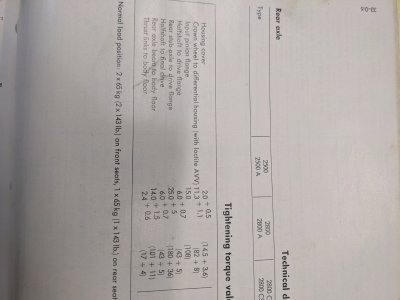
Can someone helpe decipher the torque spec. Per my blue book for the e3 bavaria the setting states 180 +36 fl/lbs.
What does the +36 part mean. Image attached
I have an e3 not an e9
Thanks!
Can someone helpe decipher the torque spec. Per my blue book for the e3 bavaria the setting states 180 +36 fl/lbs.
What does the +36 part mean. Image attached
I have an e3 not an e9
Thanks!
Attachments
Last edited:

Ha, I was in exactly the same boat as you. I replaced the front bearings and had actually ordered the rear bearing parts with the intention of changing them and also powder coating that brake protection plate. When I started the job it became obvious how challenging this would be and after hearing numerous people say the job might not be worth it I just wire brushed the plate in place and then masked it off and spray painted it. I’ll deal with those bearings when it needs to get done, not proactively…
Any thoughts on how to interpret the torque spec in my blue book?Ha, I was in exactly the same boat as you. I replaced the front bearings and had actually ordered the rear bearing parts with the intention of changing them and also powder coating that brake protection plate. When I started the job it became obvious how challenging this would be and after hearing numerous people say the job might not be worth it I just wire brushed the plate in place and then masked it off and spray painted it. I’ll deal with those bearings when it needs to get done, not proactively…
stphers
Well-Known Member
A little hint when using a punch to force the shaft out is to hold it with a pair of vice grips It save the fingers if you accidently miss a little
Thanks, Rick
Thanks, Rick
Be very careful with the big hammer approach.
If you think about the physics of the bearing, the spindle is attached to the bearing inner race (by friction), and the hub housing is attached to the outer race (also by friction).
If you hammer on the spindle, then presumably you have something holding the housing (or the hammering would not be very effective. That means the force of the hammer being applied to the hub and from there by friction to the inner race. The balls are what is going to transfer the impact from the inner race to the outer race (and then the hub housing), and that impact is going to create small flat spots on the balls, and/or indentations on the races.
This is known as Brinelling
Given the structure of the hub, I suspect it is basically not possible to remove the bearings without brinelling them. For installation you can use a tube to drive the center race onto the spindle, and then a larger tube to drive the outer race into the hub housing. You must only apply force to the race that is being installed, never transfer force or impact through the bearing.
I suspect it would also help to freeze the spindle and heat the bearing before assembly, since the heat will cause the bearing to expand, and the cold will cause the spindle to shrink. Then chill the spindle and the bearing, and heat the hub housing when installing the outer race into the housing.
If you think about the physics of the bearing, the spindle is attached to the bearing inner race (by friction), and the hub housing is attached to the outer race (also by friction).
If you hammer on the spindle, then presumably you have something holding the housing (or the hammering would not be very effective. That means the force of the hammer being applied to the hub and from there by friction to the inner race. The balls are what is going to transfer the impact from the inner race to the outer race (and then the hub housing), and that impact is going to create small flat spots on the balls, and/or indentations on the races.
This is known as Brinelling
Given the structure of the hub, I suspect it is basically not possible to remove the bearings without brinelling them. For installation you can use a tube to drive the center race onto the spindle, and then a larger tube to drive the outer race into the hub housing. You must only apply force to the race that is being installed, never transfer force or impact through the bearing.
I suspect it would also help to freeze the spindle and heat the bearing before assembly, since the heat will cause the bearing to expand, and the cold will cause the spindle to shrink. Then chill the spindle and the bearing, and heat the hub housing when installing the outer race into the housing.

Yup, all I need to know to kick this can down the road. No symptoms, just wondering about this job. Now I won't. 
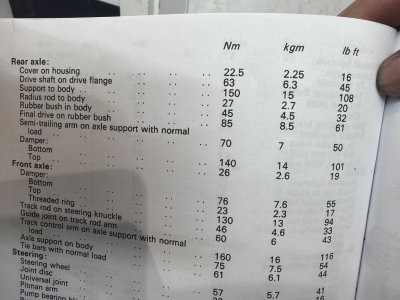

The +36 part means that the bolt is a torque to yield bolt. The bolt is first tightened to seat the parts together, then stretched to cause a permanent deformation in the bolt. The bolt is designed to yield a specific clamping load on the parts at a particular amount of deformation. Obviously, these bolts are only used once.Now y'all got me all nervous. I think I'll just paint around everything and leave the hubs alone. I'll just need to retouquq the nuts and put in new locking plates.
Can someone helpe decipher the torque spec. Per my blue book for the e3 bavaria the setting states 180 +36 fl/lbs.
What does the +36 part mean. Image attached
I have an e3 not an e9
Thanks!
T
thanks again, going to pass on removing for now. Just going to sand and repaint.Be very careful with the big hammer approach.
If you think about the physics of the bearing, the spindle is attached to the bearing inner race (by friction), and the hub housing is attached to the outer race (also by friction).
If you hammer on the spindle, then presumably you have something holding the housing (or the hammering would not be very effective. That means the force of the hammer being applied to the hub and from there by friction to the inner race. The balls are what is going to transfer the impact from the inner race to the outer race (and then the hub housing), and that impact is going to create small flat spots on the balls, and/or indentations on the races.
This is known as Brinelling
Given the structure of the hub, I suspect it is basically not possible to remove the bearings without brinelling them. For installation you can use a tube to drive the center race onto the spindle, and then a larger tube to drive the outer race into the hub housing. You must only apply force to the race that is being installed, never transfer force or impact through the bearing.
I suspect it would also help to freeze the spindle and heat the bearing before assembly, since the heat will cause the bearing to expand, and the cold will cause the spindle to shrink. Then chill the spindle and the bearing, and heat the hub housing when installing the outer race into the housing.
But isn't the the NUT that holds the stub axle on? Seems unusual that that would be a torque -to-yield sort of thing.The +36 part means that the bolt is a torque to yield bolt. The bolt is first tightened to seat the parts together, then stretched to cause a permanent deformation in the bolt. The bolt is designed to yield a specific clamping load on the parts at a particular amount of deformation. Obviously, these bolts are only used once.
Yes @ScottAndrews you are correct it's a large nut
stphers
Well-Known Member
For as much work that I have done on coupes over the years, I am hard pressed to remember if there are any torque to yield bolts on the coupe
Thanks, Rick
Thanks, Rick
I figured out the torque spec debacle. It is a torque range 180ft/lbs is the base line setting but could be set up to an additional 30ft/lbs max if needed. It's some odd way BMW and other euros listed the spec in the manuals not with a - but a + instead.
Almost ready for reassembly of the rear end. Will send some pics and a list of what I have done so far later today. Once rear is back in the car time to pull trans and clutch for a refresh.
Almost ready for reassembly of the rear end. Will send some pics and a list of what I have done so far later today. Once rear is back in the car time to pull trans and clutch for a refresh.