What is the force and stroke of the clutch in a manual transmission? I'm an amputee so the third pedal is not an option. But if I had a linear actuator to depress the clutch for me then it is game on.

You are using an out of date browser. It may not display this or other websites correctly.
You should upgrade or use an alternative browser.
You should upgrade or use an alternative browser.
Manual trans questions
- Thread starter D Calkins
- Start date

Oooooo, I like where you're going with this. I doubt it's that much force. Actuator would have to be pretty quick..hydraulic hooked through power steering pump or maybe separate redundant electric pumps? Or are electric linear actuators quick enough?
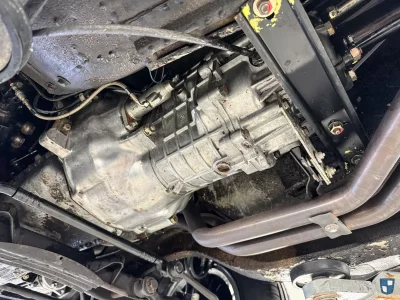

Probably want to decide on 4-speed or 5-speed since the clutch attachment is somewhat different between the two.
Great idea! that would be cool to bolt right up in place of the slave. What do you need, the bolt pattern for the slave cylinder/bell housing? I have my 4 spd still, and a 5 spd with new bell housing in case you go that way.Are all e9 a hydraulic clutch? Theoretically the linear actuator could bolt right to the bell housing. Does anyone know the bolt pattern on the clutch? I can draw it up and have send cut send water jet it for me.
Hello, I would be interested in this matter due to neuropathy in my left foot.
Larry Louton
1972 BMW Bavaria . 5 speed Getrag with 4 speed bell housing.
Larry Louton
1972 BMW Bavaria . 5 speed Getrag with 4 speed bell housing.

Larry, Your 5 speed uses the 74 and later bell housing, I assume that is what you have.Hello, I would be interested in this matter due to neuropathy in my left foot.
Larry Louton
1972 BMW Bavaria . 5 speed Getrag with 4 speed bell housing.

Some thoughts on this interesting idea.
Replacing the clutch slave with an actuator seems like a good idea. That area is better suited to an actuator that trying to rig up something to depress the clutch pedal. The throw is shorter too, because the clutch pedal has some leverage.
Someone with an operational car should measure the clutch pedal force. Put a small scale on the pedal and press it while someone records the "weight", record the throw, and the throw of the slave, and divide these two quantities. The force required to disengage the clutch will be Fc=Fp(Xp/Xs) where Fp is the force on the pedal, Xp is the throw distance of the pedal, and Xs is the throw distance of the slave.
I am fairly certain a suitable linear actuator can be found to do this.
Now for the tricky part. as anyone who has learned to drive a manual trans car will attest, the clutch engagement and disengagement process is not like a switch, the clutch needs to be eased out to the friction point and then smoothly engaged. I suspect the right way to do this is to use a lever controller (like a small one dimensional joystick. Use a servo motor setup on the lever, so there is some feel to it. Hopefully with a bit of practice, that will work. Of course this requires two hands, so this approach may not be all that great.
If not, then it may be necessary to create an automated clutch engagement and disengagement system. For example using a small button on the steering wheel. Press to disengage, release to disengage. This will require some sort of either programmed engagement/disengagement profile, or some sort of feedback based system that targets a specific acceleration profile for the car (which is basically what a driver does using the seat of the pants sensor...). Not too terribly difficult, but the development to make it consistent and user friendly will take some work.
I would also make this speed sensitive, so as the car goes faster, the shifts are faster and less slippy (yeah, that's a technical term I just made up!)
S
Replacing the clutch slave with an actuator seems like a good idea. That area is better suited to an actuator that trying to rig up something to depress the clutch pedal. The throw is shorter too, because the clutch pedal has some leverage.
Someone with an operational car should measure the clutch pedal force. Put a small scale on the pedal and press it while someone records the "weight", record the throw, and the throw of the slave, and divide these two quantities. The force required to disengage the clutch will be Fc=Fp(Xp/Xs) where Fp is the force on the pedal, Xp is the throw distance of the pedal, and Xs is the throw distance of the slave.
I am fairly certain a suitable linear actuator can be found to do this.
Now for the tricky part. as anyone who has learned to drive a manual trans car will attest, the clutch engagement and disengagement process is not like a switch, the clutch needs to be eased out to the friction point and then smoothly engaged. I suspect the right way to do this is to use a lever controller (like a small one dimensional joystick. Use a servo motor setup on the lever, so there is some feel to it. Hopefully with a bit of practice, that will work. Of course this requires two hands, so this approach may not be all that great.
If not, then it may be necessary to create an automated clutch engagement and disengagement system. For example using a small button on the steering wheel. Press to disengage, release to disengage. This will require some sort of either programmed engagement/disengagement profile, or some sort of feedback based system that targets a specific acceleration profile for the car (which is basically what a driver does using the seat of the pants sensor...). Not too terribly difficult, but the development to make it consistent and user friendly will take some work.
I would also make this speed sensitive, so as the car goes faster, the shifts are faster and less slippy (yeah, that's a technical term I just made up!)
S

The VW Autostick. It incorporated a torque convertor and a vacuum solenoid.
Thanks for the technical explanation.

Many moons ago saw a car in Spain with war veteran plates that had what looked like a motorcycle clutch lever mounted on the shifter. Can't remember if was cable to hydraulic master as on BMW R90 or some sort of solenoid. Seems like kits with updated technology as mentioned by Scott are available
https://pmeautoconversions.com.au/driving-controls/hand-controls/duck-clutch?utm_source=copilot.com

 www.mpsdrivingaids.com
Old tractors would commonly provide a hand operated clutch - might want to look up what they used.
www.mpsdrivingaids.com
Old tractors would commonly provide a hand operated clutch - might want to look up what they used.
https://pmeautoconversions.com.au/driving-controls/hand-controls/duck-clutch?utm_source=copilot.com
932 Syncrodrive | mps-guidosimplex
www.mpsdrivingaids.com
Yeah, I was thinking of that when I wrote my reply. Not sure how that worked but basically when you moved the gear lever id engaged and disengaged the clutchThe VW Autostick. It incorporated a torque convertor and a vacuum solenoid.

You could also us a ZF 4HP22 auto. The electronic version has electronic control. Compushift makes a dedicated ECU for that transmission. Fully programmable shift points. The force of the shift is also programmable. The torque converter lock up points are programmable. 2 shift modes possible for a mosey around town and more aggressive profile. You can also change gears with a paddle shift or button. Fourth gear is over driven like the 5 speed boxes 5th gear. It's a way better more modern box than the awful 3 speed box that came with the auto cars. I have one factory rebuilt awaiting the rest of my build. Compushift website is legit, the tech support is great and the ecu's are milspec quality. Seems like a serious upgrade for someone who needs an automatic. It's even easier if you have a standalone engine ECU as it will be a single wire canbus connection to send all the engine data to the box ECU. Otherwise you need a throttle position sensor.
To verify, the clutch pedal force would not be recorded at the pedal, but rather at the bellhousing to push the actual clutch fork, as that's where the force would be applied, correct? Or am I misunderstanding? I believe the pedal would no longer be attached to anything, therefore the force would be a different measurement. An actuator at the bell housing would be the desired set up...and yeah, it would need to be able to be feathered out for smooth engagement..fun project!Some thoughts on this interesting idea.
Replacing the clutch slave with an actuator seems like a good idea. That area is better suited to an actuator that trying to rig up something to depress the clutch pedal. The throw is shorter too, because the clutch pedal has some leverage.
Someone with an operational car should measure the clutch pedal force. Put a small scale on the pedal and press it while someone records the "weight", record the throw, and the throw of the slave, and divide these two quantities. The force required to disengage the clutch will be Fc=Fp(Xp/Xs) where Fp is the force on the pedal, Xp is the throw distance of the pedal, and Xs is the throw distance of the slave.
I am fairly certain a suitable linear actuator can be found to do this.
Now for the tricky part. as anyone who has learned to drive a manual trans car will attest, the clutch engagement and disengagement process is not like a switch, the clutch needs to be eased out to the friction point and then smoothly engaged. I suspect the right way to do this is to use a lever controller (like a small one dimensional joystick. Use a servo motor setup on the lever, so there is some feel to it. Hopefully with a bit of practice, that will work. Of course this requires two hands, so this approach may not be all that great.
If not, then it may be necessary to create an automated clutch engagement and disengagement system. For example using a small button on the steering wheel. Press to disengage, release to disengage. This will require some sort of either programmed engagement/disengagement profile, or some sort of feedback based system that targets a specific acceleration profile for the car (which is basically what a driver does using the seat of the pants sensor...). Not too terribly difficult, but the development to make it consistent and user friendly will take some work.
I would also make this speed sensitive, so as the car goes faster, the shifts are faster and less slippy (yeah, that's a technical term I just made up!)
S
Yes, the force is at the clutch fork. The reason I suggested measuring the pedal force is because that's easier. You measure the pedal force and travel, and then compute the fork force based onthe mechanics of the pedal (it is ultimately just a lever).To verify, the clutch pedal force would not be recorded at the pedal, but rather at the bellhousing to push the actual clutch fork, as that's where the force would be applied, correct? Or am I misunderstanding? I believe the pedal would no longer be attached to anything, therefore the force would be a different measurement. An actuator at the bell housing would be the desired set up...and yeah, it would need to be able to be feathered out for smooth engagement..fun project!
That sounds like a MUCh easier setup.. Repurpose the flasher stalk to use as a paddle shifter!!You could also us a ZF 4HP22 auto. The electronic version has electronic control. Compushift makes a dedicated ECU for that transmission. Fully programmable shift points. The force of the shift is also programmable. The torque converter lock up points are programmable. 2 shift modes possible for a mosey around town and more aggressive profile. You can also change gears with a paddle shift or button. Fourth gear is over driven like the 5 speed boxes 5th gear. It's a way better more modern box than the awful 3 speed box that came with the auto cars. I have one factory rebuilt awaiting the rest of my build. Compushift website is legit, the tech support is great and the ecu's are milspec quality. Seems like a serious upgrade for someone who needs an automatic. It's even easier if you have a standalone engine ECU as it will be a single wire canbus connection to send all the engine data to the box ECU. Otherwise you need a throttle position sensor.
Yeah, that probably makes the most sense...Although, I do enjoy the idea of the engineering challenge of the actuators...
Me too!!Yeah, that probably makes the most sense...Although, I do enjoy the idea of the engineering challenge of the actuators...
So the actuator is pretty simple. I assume there is a transfer function that converts applied voltage to linear motion. If it is just a solenoid, then the applied current would produce a force, and the resulting motion would depend onthe resistive force of the clutch. So that is the first hurdle to address. If it is really just a solenoid, then we would some sort of servo loop to change the current to achieve the acceleration we wanted, although that approach also introduced uncertainties related to how much accelerator pedal the driver is applying.
Another consideration is that disengaging the clutch seems easier than engaging it.
ALso, probably need to consider engine speed and accelerator position. You don't want to disengage the clutch with the trans in gear, and under load, or the engine will redline. So you will need a throttle position sensor, an accelerometer, and some sort of programmed engagement and disengagement profile, probably servo controlled.
Well, the actuated clutch option seems way more complicated and uncertain. An automatic that actually works (and the flasher stalk idea is brilliant!) could function like a clutchless manual. No unknowns, the gearbox was used for ages in tons of cars and is cheap. I don't need to use a clutch but my E9 was an automatic and I wanted one car that i could use on long tours with my wife and/or daughter. Given that we are using a standalone ECU for the engine, most of that data is fed to the transmission ECU for even more advanced processing of load, etc. I have used this setup with a GM box in Jaguar Mk 2 and it works really well. The only issue to be aware of is that there are several different torque converters and the heavier duty version (over 300hp) is too thick for the standard tunnel. The beauty of this setup is that no mods to the car need to be made. When the car is complete I will do a more formal write up about the process and results.
Yeah, this seems like a great solution, and the fact that you can do a paddle type shifter makes the driving experience even more manual-like, without the massive complexity of an electromechanical clutch. There are just way too many factors to take into account for a clutch mechanism like that.Well, the actuated clutch option seems way more complicated and uncertain. An automatic that actually works (and the flasher stalk idea is brilliant!) could function like a clutchless manual. No unknowns, the gearbox was used for ages in tons of cars and is cheap. I don't need to use a clutch but my E9 was an automatic and I wanted one car that i could use on long tours with my wife and/or daughter. Given that we are using a standalone ECU for the engine, most of that data is fed to the transmission ECU for even more advanced processing of load, etc. I have used this setup with a GM box in Jaguar Mk 2 and it works really well. The only issue to be aware of is that there are several different torque converters and the heavier duty version (over 300hp) is too thick for the standard tunnel. The beauty of this setup is that no mods to the car need to be made. When the car is complete I will do a more formal write up about the process and results.
In an automatic, the torque converter deals with all that engagement/disengagement complexity.