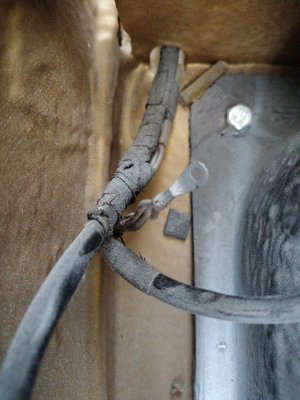
I'm with Scott on this one, although this is where the purist and the practical one diverge. Don (appropriately) told me there should only be black wires visible in the engine bay. He is right - my blue/striped wire that I added running to my additional temp gauge with a label saying "temp sensor" in yellow on it is not correct visually. But as a novice here, it sure is helpful to know when I'm on the other end of things in the fusebox and I see a wire labeled "temp sensor" to know what I"m looking at. Especially true for any circuits I added - between additional wiring for relays, wiring for three additional gauges, adding two additional aux wires long enough to reach the rear seat tucked into the recesses of the fusebox for any future upgrade, I'm trying to make sure that me and anyone after me knows what in the hell goes where.An addendum to my post above (now that I am sitting at my computer as opposed to composing this on my phone...)
Do you have a multimeter? Measures voltage, current and resistance (at a minimum). If not, go buy one. I recommend Fluke, but really any type will generally do.
For the lamp (or any other) terminal that causes the car to not run when you connect the wire, measure the component's terminal resistance to ground with the wire un-attached. If that resistance is less than about 6 ohms, then there is a short in that compomnent. It is not the wiring, it is the component you are connecting the wiring to.
It is highly unlikely that your wiring got compromised while out of the car unless you specifically changed it. It is possible that you may have cracked some insulation on re-install, but again unlikely. More likely is hooking things up wrong.
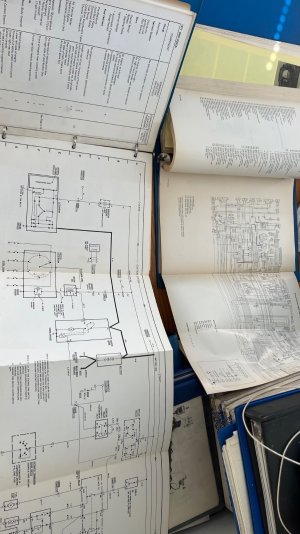
When I pulled the wires out of my car I labeled every wire as I disconnected it. Hopefully you did the same. If not get the Blue Book wiring diagram for your car, read the color, codes and connect things accordingly. If in doubt, trace the wire to its source (usually a fuse or a switch) to confirm what wire it is...
It is not mysterious, but it takes patience and attention to detail.
When I put the wiring back in my car I am going to label every single wire at both ends. If you want to do this get a wire lable maker.
Brady Wire Labeler
I'll second Scott's suggestion on the multimeter. I'm still a novice there as well, but Rob Seigel's book "The Hack Mechanic Guide to European Electrical Systems" is really well written. He's a forum member here and I found the book helpful in understanding how the circuitry works.