Update #9
- The brake odyssey
Well, now that we were done with the engine and were sure it was cooling properly (aside from knowing I hadn't checked our gas tank, I didn't mind doing our first lap with a jerrycan of gas instead of the tank. I knew it was going to be in bad shape, so it wasn't a priority right now), it was time to take the next step and make sure we could stop the car.
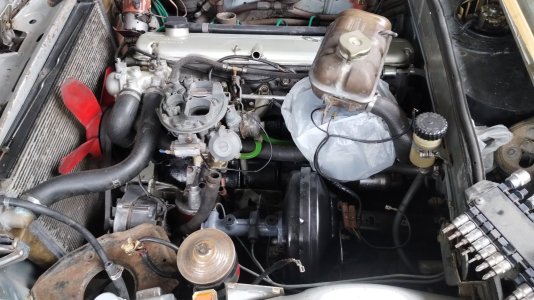
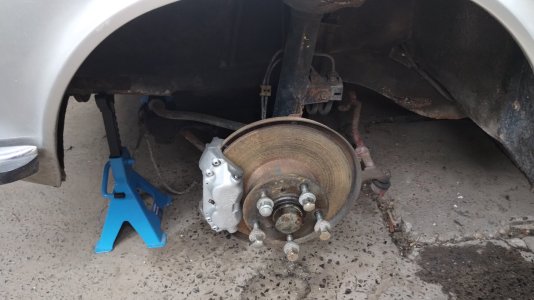
The car arrived with no brake fluid in the reservoir, and removing the cap revealed a lot of gunk, which already gave me an indication of what I might find in the rest of the system. My plan was simple: remove the calipers, clean them, paint them, and also remove the master cylinder to send it for inspection to ensure everything would work correctly.
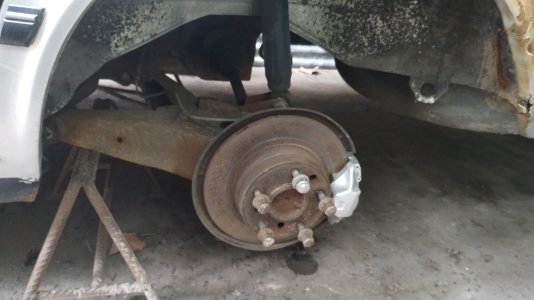
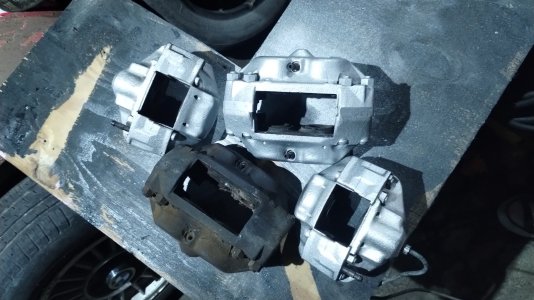
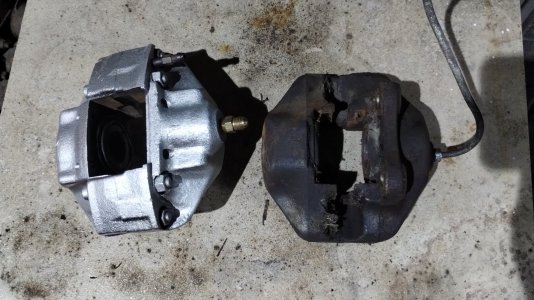
So we got started. I disassembled the calipers, and to my surprise, it seemed the brakes were one of the things checked before the car was stopped. The rotors, pads, and hoses were new. That gave me a lot of peace of mind. With this line of work, I decided to clean and paint the calipers. I chose a silver-gray for the repaint, and at first glance, it seemed like a good color choice.
I found it very curious that the front calipers had dual brake lines.
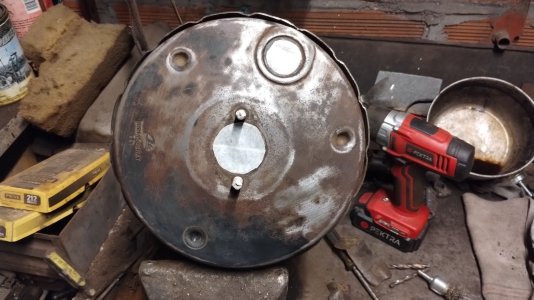
Knowing that the calipers would be an easy task (only one connection was difficult to remove), I decided to remove the brake master cylinder and the servo to paint them more easily. I separated the master cylinder from the servo and decided to remove the servo first. When I removed it, I encountered an unpleasant surprise... the inside was full of fluid, but... RED FLUID. Yes, there was hydraulic fluid inside the servo. That couldn't be good under any circumstances. How had it gotten there? That was my first thought. I would find the answer by removing the master cylinder.
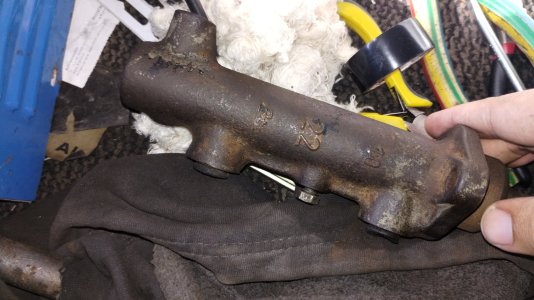
When I disassembled the lines, the front circuit of the master cylinder was leaking yellow fluid (old, dirty brake fluid), and the rear circuit started leaking the reddish, dirty fluid. So my theory was that someone made a mistake when filling the reservoir with fluid; they drained it, but it was too late. The fluid entered a circuit and ended up breaking a seal in the pump (or it was already broken) and leaked into the brake booster.
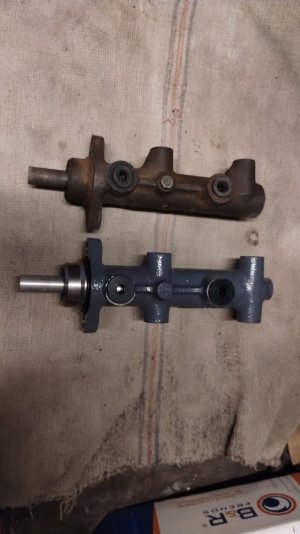
With this in mind, I took my master cylinder to a brake shop for inspection, but unfortunately, they gave me the worst possible diagnosis: it was beyond repair. Disappointed, I looked for used master cylinders on eBay and the forum, but the prices weren't particularly attractive. I looked for similar BMW parts being salvaged, but to my surprise, it wasn't normal for them to have five outlets.
I didn't give up and searched on Argentina's most popular online store (Mercado Libre, similar to eBay in the US) and only found two types of brake master cylinders with five outlets and the same internal diameter as mine. One was from a Renault van and the other from a VW Kombi. I tried buying the Renault one, but it was considerably larger and didn't quite fit the brake booster. I swapped it and went all in with the VW Kombi one, and to my surprise, they were practically identical! Only the position of the rear brake outlets was different, but the rest was very similar. Then I reasoned and remembered that the Kombi is from a similar era and also German, so it wasn't surprising that they shared some brake parts (just as the rear brake pressure regulator is similar to that of some Porsches).
Before installing the master cylinder, I wanted to repaint the brake booster, but I was worried it might be in bad condition due to the fluid inside. So I did a couple of tests. I installed the new pump on the servo and connected it to the engine to see how it worked, mainly to see if I felt any changes in the pedal when starting the engine. To my surprise, when I started the engine, the pedal became incredibly soft and felt practically disconnected (yes, I know there wasn't a wheel connected to the pump, but there was still a difference in pedal feel). I also listened for any air leaks or hissing sounds when pressing the pedal, but everything was fine.
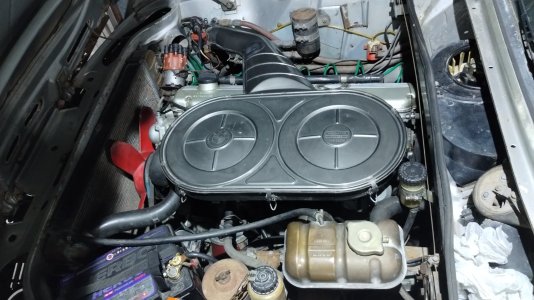
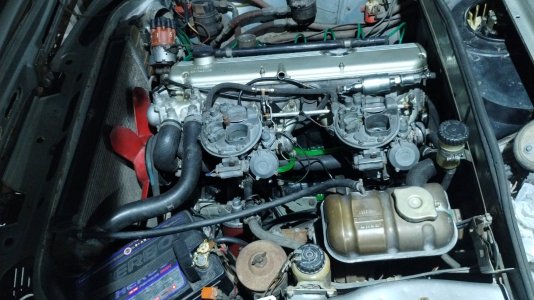
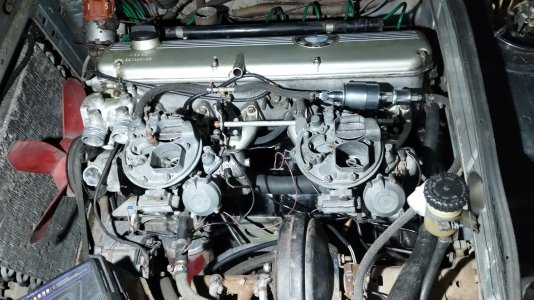
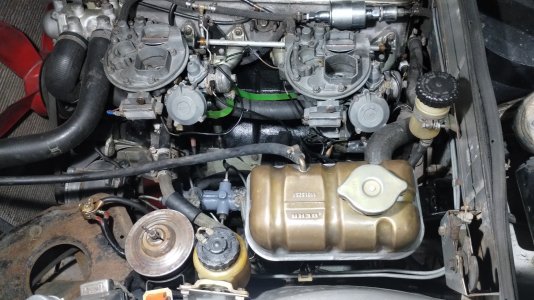
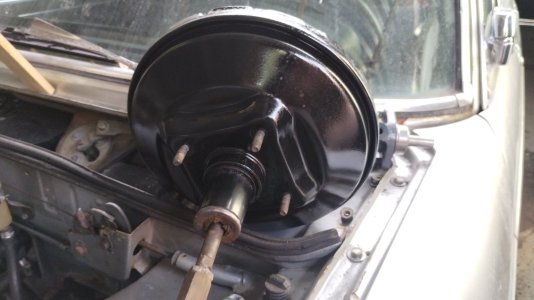
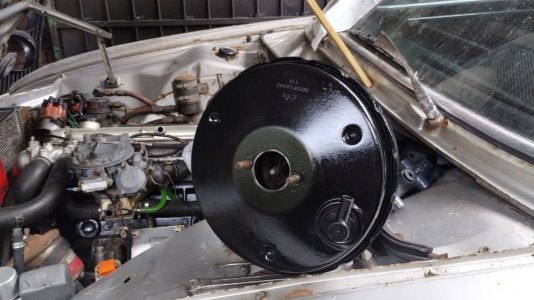
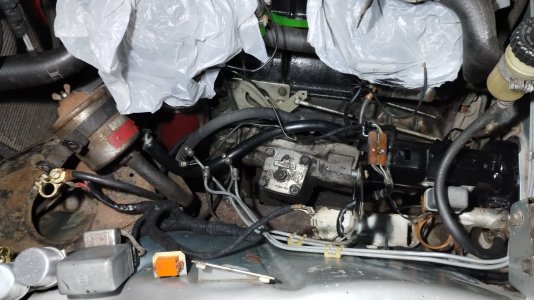
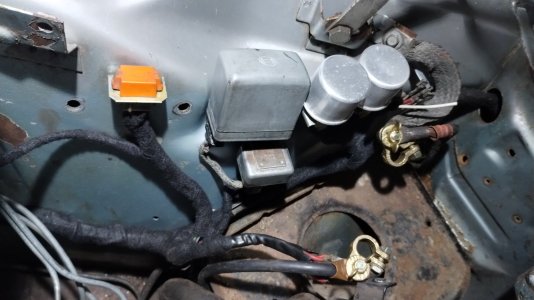
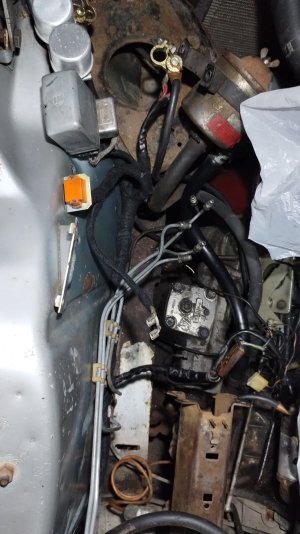
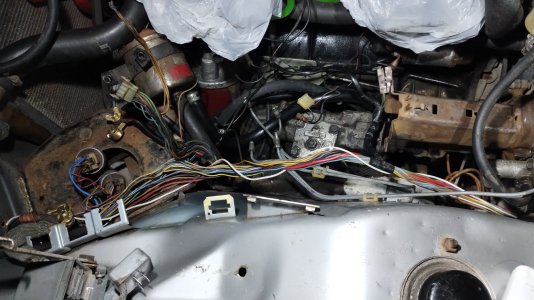
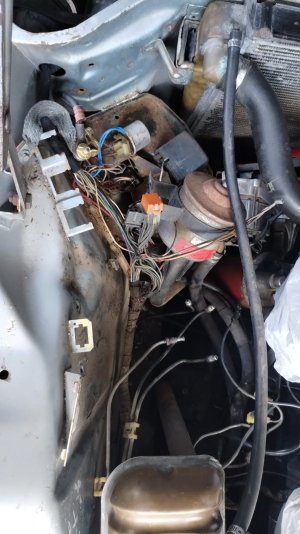
With that confirmed, it was time to prepare and paint it. An afternoon of sanding and a coat of satin black spray paint completely transformed the servo. While it was drying, I took the opportunity to finish tidying up the wiring in the engine bay that I hadn't yet done. Without the pump and servo, I had enough space to inspect and organize all the wires coming out of the engine compartment.
The next day, with everything dry, it was time to start reassembling, and I must admit I was very pleased with how the new master cylinder looked. But all this was just the beginning of the odyssey. I still had to bleed the entire brake system.
Logically, you should start by bleeding the brakes from the wheel furthest from the master cylinder, and I tried, but no fluid was reaching that rear wheel. Thinking about it, I realized that perhaps the new master cylinder was faulty, so I proceeded to bleed a front wheel to rule out any problems. As soon as I opened a front bleeder valve, jets of fluid came out, which suggested that at least one circuit was working. I tried the other bleeder valve, and it worked perfectly as well. I thought, "Okay, the master cylinder seems to be working, let's try another wheel." I went to the other front wheel and was able to bleed it perfectly too. It seemed strange, but I decided to try the other rear wheel; perhaps my problem was just a clogged brake line. I tried the other rear wheel, and to my surprise, not a drop of fluid came out either.
Upon closer inspection, I saw that the rear brake regulator acts as an intermediary and fluid distributor for both wheels. I carefully disconnected one of the lines to see if there was fluid there, and to my surprise, it was completely dry. I tried the other line, also dry. Going all in, I tried the inlet line to the regulator, and bingo! This one had fluid. Therefore, my problem was the regulator.
I proceeded to remove the regulator and carefully disassemble it. I had read that they operated under high pressure, so I didn't know what might leak out. Sure enough, I found a lot of dirt inside. I carefully cleaned everything and reassembled it. I reinstalled it in the car, and still no fluid came out, not a single drop from the outlets.
I disassembled it again and began examining the piston inside. It appeared that the internal passages were clogged, but I saw a threaded brass piece that could be removed. "I'll try it," I said, thinking that this would give me better access to clean the inside, but it was very... very tight, and something unfortunate happened. This cylinder broke in half...
I could only sigh... I knew it would be impossible to find this part in my country, let alone a replacement, and the prices for used ones were also way out of my budget. I couldn't do anything at that moment, so I proceeded to do the most sensible thing I could think of: reassemble the regulator housing, but without this piston. Looking at the broken part, it might not be a challenge for a machinist who wants to replicate it. Anyway, I just wanted to test the car; I wasn't going to drive it as a daily driver or anything like that, and this way the regulator would simply act as a T-fitting distributing the fluid to both rear wheels.
Now all that was left was to reinstall it and finish bleeding the rear brakes. Luckily, it went well, but I knew I'd have to deal with this problem later.
At least I was sure the front brakes would work fine, and the new master cylinder should do its job.
With some ups and downs, we finished checking the E3's brakes. At least temporarily, it would be enough to test drive the car around the neighborhood once and satisfy our urge to really get to know it.
PS: I'll update the photos soon with the broken regulator part. Anyway, if anyone has one for sale, let me know.
PS 2: At this stage of the car project, I started working on several things simultaneously, so there will be several updates coming together, and you'll notice this in the dates in the photo titles.