Yes, window motor wires. First one is voltage regulator.I just wanted to confirm that I'm cutting this off and crimping on new connections

Yes, window motor wires. First one is voltage regulator.I just wanted to confirm that I'm cutting this off and crimping on new connections


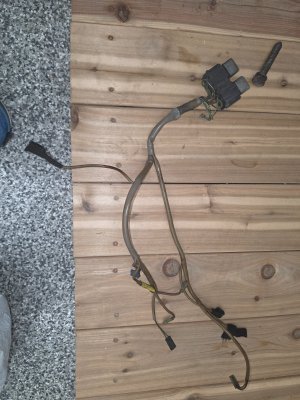
This is the power connection coming off the e28 window regulator motor.any idea where this was connected? i don't recognize that connector ... but then again i haven't worked on a '74 coupe
Because I have the circuit breakers under the steering column I didn't believe it was necessary.Be thankful that you're going from 2-wire motors to 2-wire motors. 3-wire to 2-wire was a pain especially by the time the relays got added in. You ARE adding in relays though, correct?
They would be serving a different purpose. At least in my car, the wiring originally went through a very long route from battery/harness into fusebox area then out to console switch then back towards front of car before then heading rearward to the window motor. Closing the switch (up/down) allows the electrical signal to go that whole route and power the motor, but because of the long run the actual voltage delivered at the motor is less than what is coming out of the battery (your 12-13V). There's a long thread on this where someone (perhaps Scott) calculated the actual voltage drop and it's significant, which means less power to power an old motor with some resistance from grease, etc. Updating the motors and cleaning the track helps, but the relay allows a run directly from battery straight back to the motor - the shortest possible route. The switch in the console wires into the relay and essentially controls the gate within the relay either allowing power through or not. That wire run between switch and relay (both there and back) is what is electrically cut out of the original distance that had to be traversed between power to the motor so much less voltage drop. When I first had to deal with this I found these somewhat confusing but after you sit with it for a bit and study the diagrams it makes sense and they are pretty easy to wire in, especially since there is room there in the window area to actually hold the relay next to the motor.Because I have the circuit breakers under the steering column I didn't believe it was necessary.

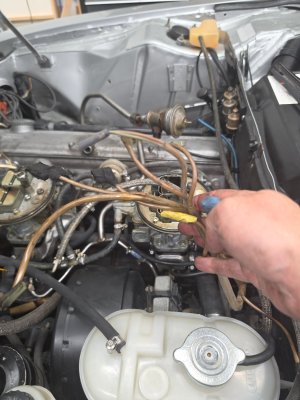
74's had a torch in the glove box. Those wires might be for that. Any current in them ?My car was just delivered and so far, I'm pleasantly surprised. Can someone please tell me what these wires are from? Would photo # 3 suggest I have a relatively new OE Radiator?
Thanks
David

The other issue with running the power through the window switches is that those switches are pretty flimsy, and the motors draw a lot of current. The switch itself will age as the contacts burn and corrode, and that will add further resistance.They would be serving a different purpose. At least in my car, the wiring originally went through a very long route from battery/harness into fusebox area then out to console switch then back towards front of car before then heading rearward to the window motor. Closing the switch (up/down) allows the electrical signal to go that whole route and power the motor, but because of the long run the actual voltage delivered at the motor is less than what is coming out of the battery (your 12-13V). There's a long thread on this where someone (perhaps Scott) calculated the actual voltage drop and it's significant, which means less power to power an old motor with some resistance from grease, etc. Updating the motors and cleaning the track helps, but the relay allows a run directly from battery straight back to the motor - the shortest possible route. The switch in the console wires into the relay and essentially controls the gate within the relay either allowing power through or not. That wire run between switch and relay (both there and back) is what is electrically cut out of the original distance that had to be traversed between power to the motor so much less voltage drop. When I first had to deal with this I found these somewhat confusing but after you sit with it for a bit and study the diagrams it makes sense and they are pretty easy to wire in, especially since there is room there in the window area to actually hold the relay next to the motor.

just ordered one, thanks for the linkEveryone needs a wiring diagram. @autokunst was nice enough to send me this when he sold his car:
View attachment 223915
The color diagrams below the huge one were acquired online from prospero wiring diagrams. I think this is a link to the diagram for your car: https://www.ebay.com/itm/3203430451...PFF8YC&hash=item4a95eef440:g:LXgAAOSw90pfBSLb
Probably so they could go back if they wanted. I woudl just put shrink wrap onthe connectors and tuck them away as invisibly as possible. Putting them back would be a huge amount of work if you ever needed or anted to do that.Why would someone go to the trouble to tape off all the ends instead of simply removing the wiring harness?
That giant poster is a great idea. I have that same diagram. I think I may blow it up like thatEveryone needs a wiring diagram. @autokunst was nice enough to send me this when he sold his car:
View attachment 223915
The color diagrams below the huge one were acquired online from prospero wiring diagrams. I think this is a link to the diagram for your car: https://www.ebay.com/itm/3203430451...PFF8YC&hash=item4a95eef440:g:LXgAAOSw90pfBSLb

they didn't want to undo the harness to get to where the wires started. i removed some green / white wires that went to speed relays for carbs a few weeks ago on my car and it hadn't had carbs in 20+ years. those wires went all the way to the fusebox.Why would someone go to the trouble to tape off all the ends instead of simply removing the wiring harness?